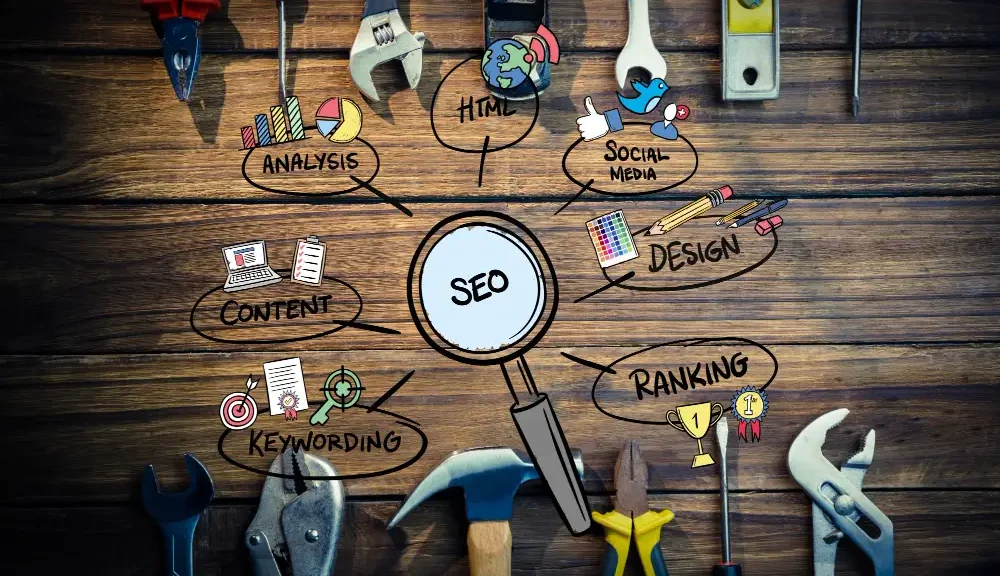

Is Your Small Business Visible Online? A Practical Approach to Search Engine Optimization
In today’s digital landscape, a strong online presence isn’t a luxury for small and medium-sized businesses (SMBs); it’s a necessity. Potential customers are searching online for products and services like yours every single day. If they can’t find you, they’ll find your competitors. That’s where effective Search Engine Optimization (SEO) comes into play. It’s the art and science of making your website more appealing to search engines like Google, ensuring it ranks higher in search results when people look for what you offer. For SMBs, this means more organic traffic, more leads, and ultimately, more customers. At Code Digital Solutions, we understand the unique challenges and opportunities facing startups and small businesses. Our mission is to help you thrive online with expert web development, SEO, PPC, and digital marketing services. We’re committed to building your brand’s digital future, from responsive websites to results-driven campaigns.
Many small business owners feel overwhelmed by the jargon and complexity often associated with SEO. You might be thinking, “Isn’t SEO just for big corporations?” The truth is, SEO is arguably *more* critical for smaller businesses. While large corporations have massive marketing budgets, you can leverage strategic SEO to compete effectively and carve out your niche. This isn’t about complex algorithms or chasing fleeting trends; it’s about understanding your audience and providing them with valuable information, presented clearly on your website and discoverable by search engines.
Why SEO Matters Most for Small Businesses
Think about your own online behavior. When you need a service or product, where do you typically start? Most likely, you turn to a search engine. If you’re looking for a local plumber, a boutique gift shop, or a specialized consultant, you’ll type those keywords into Google. If your business doesn’t appear on the first page, or even the first few pages, you’re likely missing out on a significant number of potential customers. Here’s why focusing on SEO is a smart investment:
- Increased Visibility and Brand Awareness: Higher rankings mean more people see your brand. Consistency in appearing for relevant searches builds recognition and trust.
- Targeted Traffic: SEO attracts users who are actively searching for solutions you provide. This traffic is more likely to convert into leads and customers than traffic from other sources.
- Cost-Effectiveness: Compared to paid advertising (PPC), SEO offers a sustainable, long-term ROI. While it requires investment in time and expertise, the organic traffic it generates is essentially free once you rank.
- Local Dominance: For businesses serving a specific geographic area, local SEO is paramount. It helps you appear in ‘near me’ searches and on Google Maps, connecting you with nearby customers.
- Credibility and Trust: Websites that rank highly are often perceived as more authoritative and trustworthy by users.
Foundational SEO Strategies for SMBs
Implementing SEO doesn’t have to be an insurmountable task. Start with these core strategies, focusing on quality and user experience, which are the cornerstones of modern SEO. Our approach at Code Digital Solutions is always business-focused: how can we get you tangible results?
1. Keyword Research: Understanding Your Customer’s Language
Before you can rank for something, you need to know what people are actually searching for. Keyword research is the bedrock of any successful SEO strategy. It involves identifying the terms and phrases your target audience uses when looking for your products or services.
Understanding User Intent
It’s not just about the words; it’s about the intent behind them. Are users looking for information (informational intent), comparing options (commercial investigation intent), ready to buy (transactional intent), or trying to find a specific website (navigational intent)? For example, someone searching “best coffee shops near me” has a different intent than someone searching “how to brew the perfect espresso.” Tailor your content to match these intents.
Tools and Techniques
Utilize tools like Google Keyword Planner, Ahrefs, SEMrush, or even Google’s own ‘Related searches’ and ‘People also ask’ features. Look for keywords that have a decent search volume but are not overly competitive. Focus on long-tail keywords – longer, more specific phrases (e.g., “organic gluten-free bakery Brooklyn”) – as they often have higher conversion rates and less competition.
2. On-Page Optimization: Making Your Website Search-Engine Friendly
Once you know your keywords, you need to integrate them naturally into your website’s content and structure. This is on-page optimization.
Compelling Title Tags and Meta Descriptions
These are the first things users see in search results. Your title tag should accurately describe the page’s content and include your primary keyword. Your meta description should entice users to click, acting as a mini-advertisement. Make them unique for every page.
High-Quality, Relevant Content
Search engines prioritize websites that offer valuable, informative, and engaging content. This means detailed product descriptions, insightful blog posts, helpful guides, and clear service pages. Ensure your content is well-written, easy to read, and directly addresses the needs and questions of your target audience. Think about what problems you solve for your customers and create content around those solutions.
Header Tags (H2, H3, etc.)
Use header tags to structure your content logically. H2 tags should denote main sections, and H3 tags sub-sections. This improves readability for users and helps search engines understand the hierarchy and topic of your content.
Image Optimization
Compress images to improve loading speed. Use descriptive alt text for images, incorporating relevant keywords where appropriate. Alt text is crucial for accessibility and helps search engines understand image content.
Internal Linking
Link relevant pages within your website together. This helps users navigate your site, distributes link equity, and signals to search engines the relationship between different pieces of content.
3. Technical SEO: The Backbone of Your Website’s Performance
Technical SEO ensures that search engines can crawl, index, and understand your website effectively. It’s the foundation upon which your content and off-page efforts are built.
Website Speed and Mobile-Friendliness
A slow-loading website frustrates users and harms your rankings. Google prioritizes mobile-first indexing, meaning it primarily uses the mobile version of your site for ranking. Ensure your website is responsive and loads quickly on all devices. Tools like Google PageSpeed Insights can help identify areas for improvement.
Site Structure and Navigation
A clear, intuitive site structure makes it easy for both users and search engines to find information. A logical navigation menu and well-organized content hierarchy are essential.
XML Sitemaps and Robots.txt
An XML sitemap acts as a roadmap for search engines, listing all the important pages on your site. The robots.txt file tells search engines which pages they can or cannot crawl. Ensuring these are correctly configured is vital.
HTTPS Security
Having an SSL certificate (HTTPS) is a security standard and a minor ranking signal. It builds trust with visitors.
4. Local SEO: Connecting with Nearby Customers
For most small businesses, attracting local customers is key. Local SEO focuses on optimizing your online presence to attract more business from relevant local searches.
Google Business Profile (GBP) Optimization
Claiming and fully optimizing your Google Business Profile is non-negotiable. Ensure all information is accurate and complete: business name, address, phone number (NAP), hours, services, photos, and categories. Encourage customer reviews and respond to them promptly.
Local Citations and Directories
Consistent NAP information across online directories (Yelp, Yellow Pages, industry-specific sites) builds trust and authority. Ensure your listings are accurate and uniform.
Location-Specific Keywords
Incorporate location-based keywords into your website content (e.g., “plumber in Dallas,” “best pizza downtown Chicago”).
Online Reviews
Positive reviews on platforms like Google, Yelp, and Facebook significantly influence local search rankings and customer decisions. Actively encourage satisfied customers to leave reviews.
5. Off-Page Optimization: Building Authority and Trust
Off-page SEO refers to activities taken outside of your website to impact your rankings within search engine results pages. The most significant aspect of this is building high-quality backlinks.
Link Building Strategies
Backlinks are votes of confidence from other websites. Earning links from reputable, relevant sites signals to search engines that your content is valuable. Focus on quality over quantity. Strategies include guest blogging on industry sites, creating shareable content, and building relationships with other businesses.
Social Signals
While social media shares aren’t a direct ranking factor, an active social media presence can drive traffic to your site, increase brand awareness, and indirectly contribute to SEO by making your content more discoverable.
Brand Mentions
Even unlinked mentions of your brand can be a positive signal to search engines.
Measuring Your SEO Success
SEO is an ongoing process. It’s crucial to track your progress to understand what’s working and where improvements are needed. Key metrics include:
- Organic Traffic: The number of visitors coming to your site from unpaid search results.
- Keyword Rankings: How your site ranks for your target keywords.
- Conversion Rate: The percentage of visitors who complete a desired action (e.g., fill out a form, make a purchase).
- Bounce Rate: The percentage of visitors who leave your site after viewing only one page.
- Google Business Profile Insights: Track views, clicks, calls, and direction requests from your GBP listing.
Tools like Google Analytics and Google Search Console are invaluable for monitoring these metrics. At Code Digital Solutions, we believe in transparent reporting and helping you understand the impact of your digital marketing efforts. We help startups and small businesses thrive online with expert web development, SEO, PPC, and digital marketing services, always focusing on delivering measurable results.
Navigating the Future of SEO for SMBs
The digital landscape is constantly evolving. Voice search, artificial intelligence, and user experience continue to shape how search engines work. For small businesses, the key is to stay adaptable and focus on the fundamentals: creating valuable content, ensuring a seamless user experience, and building genuine authority. By investing in a strategic SEO approach, you’re not just improving your website’s visibility; you’re investing in the sustainable growth and long-term success of your business. Don’t let complexity hold you back; embrace the power of SEO to connect with more customers and achieve your business goals.
Frequently Asked Questions
What is the most important aspect of SEO for a brand new small business website?
For a brand new small business website, the most crucial initial steps involve solid keyword research to understand what your target audience is searching for, and optimizing your core on-page elements. This includes crafting clear title tags and meta descriptions that accurately reflect your service/product and include relevant keywords, ensuring your website is mobile-friendly and loads quickly, and creating high-quality content that directly addresses customer needs. Setting up your Google Business Profile correctly is also paramount for local visibility.
How long does it take to see results from SEO?
SEO is a long-term strategy, and results typically take time to materialize. You might start seeing some improvements in rankings and traffic within 1-3 months, especially for less competitive keywords or local searches. However, significant and sustainable results often require 6-12 months or even longer, depending on the industry, competition, and the consistency of your SEO efforts. It’s an ongoing process of refinement and adaptation.
Is SEO expensive for small businesses?
The cost of SEO can vary widely. While DIY SEO can be time-consuming, it can be very cost-effective if you have the time and willingness to learn. Hiring an agency or freelancer can range from a few hundred to several thousand dollars per month, depending on the scope of work and the agency’s expertise. However, when viewed as an investment rather than an expense, effective SEO typically provides a strong return on investment (ROI) through sustained organic traffic and qualified leads, often proving more cost-effective in the long run than paid advertising.
How can I improve my local SEO without a big budget?
You can significantly improve local SEO with minimal budget by focusing on foundational elements: fully optimizing your Google Business Profile (this is free!), encouraging customer reviews, ensuring your business name, address, and phone number (NAP) are consistent across online directories, and creating location-specific content on your website. Engaging with your local community online and offline can also indirectly boost your local visibility.
What is the difference between SEO and SEM?
SEO (Search Engine Optimization) refers to the organic, unpaid methods used to improve a website’s ranking in search engine results pages (SERPs). This includes content creation, keyword optimization, link building, and technical improvements. SEM (Search Engine Marketing) is a broader term that encompasses both SEO and paid advertising (like Google Ads or PPC). Essentially, SEM is about driving traffic from search engines through both organic and paid means, while SEO focuses solely on the organic aspect.